
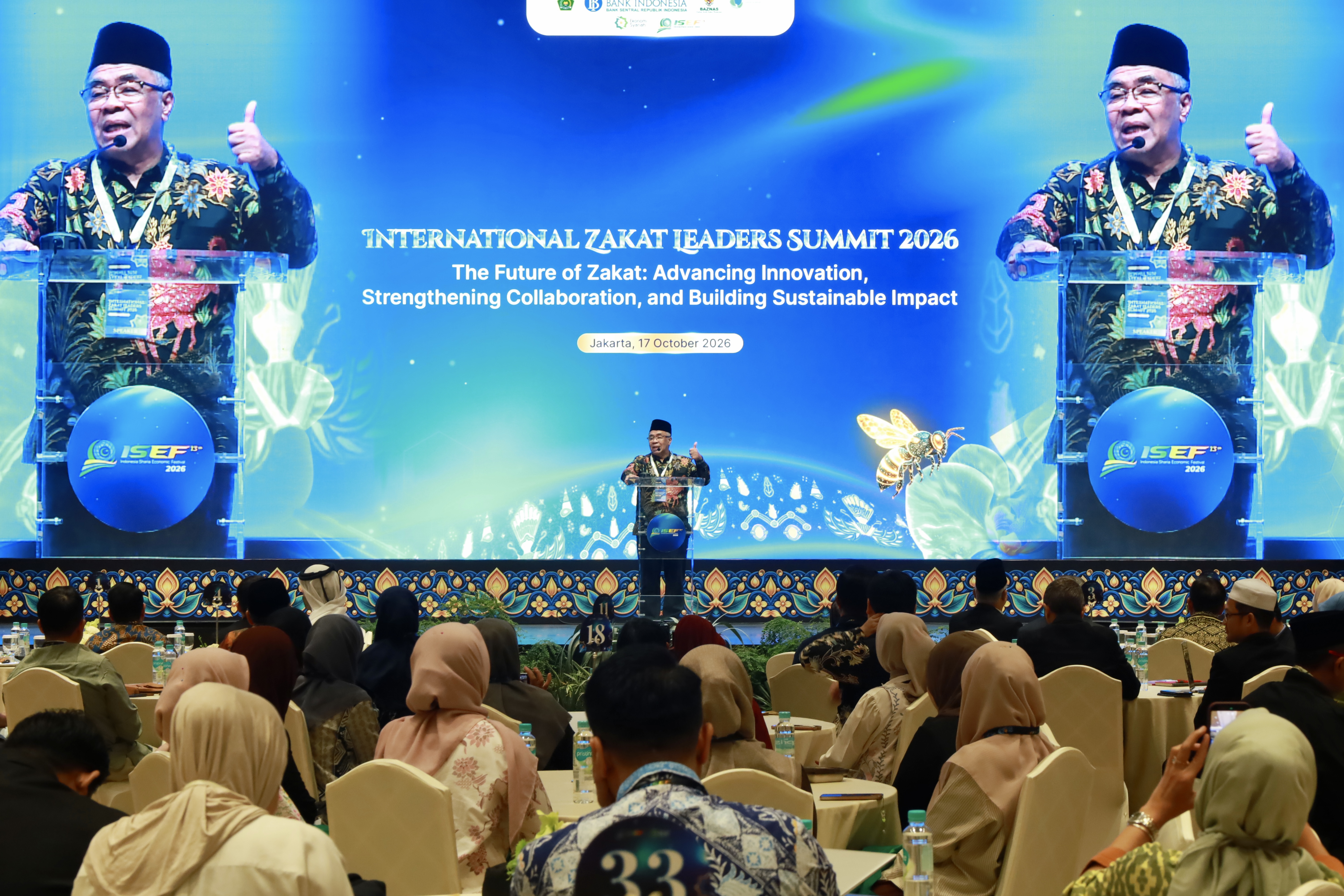
Jakarta, 17 October 2026 - The National Zakat Agency of the Republic of Indonesia (BAZNAS) has underscored the strategic role of zakat, infaq, and sadaqah (ZIS) in strengthening the sharia economic ecosystem and fostering the self-reliance of the Muslim community. With the effective management of community funds, zakat is expected to make an even greater contribution to public welfare.
The message was delivered by BAZNAS Chairman Dr. Ir. H. Sodik Mudjahid, M.Sc., at the opening of the International Zakat Leader Summit in Jakarta on Saturday. The summit's theme is "The Future of Zakat: Advancing Innovation, Strengthening Collaboration, and Building Sustainable Impact."
In his opening remarks, Sodik described ZIS as an essential part of the sharia economic ecosystem, one that drives equitable growth. "We must therefore place our discussions on zakat, infaq, and sadaqah within the framework of the Islamic, or sharia, economic system, which the Quran assures us will deliver equitable growth," he said. He went on to explain that BAZNAS supports the growth of the sharia economy in three ways: helping small business owners obtain halal certification, collecting ZIS, and improving public literacy.
"BAZNAS also promotes the halal industry, and we are helping a number of small business owners obtain halal certification. Of course, BAZNAS collects zakat, infaq, and sadaqah, and we also educate the public about them," he said. Echoing this, Secretary-General of the Indonesian Ministry of Religious Affairs, Prof. Dr. Phil. Kamaruddin Amin, MA., said that the future of zakat depends on more than the amount of funds raised. It also rests on the quality of management, the professionalism of zakat administrators, regulation, accurate targeting, and the impact achieved.
"The future of zakat is not determined by the amount of funds collected alone. Success also depends heavily on the quality and professionalism of zakat administrators, the quality of regulations, the accuracy of targeting, and the ability to demonstrate impact on society," he said. From an international perspective, Secretary-General of the World Zakat and Waqf Forum (WZWF), H.E. Datuk Dr. Mohd Ghazali Md Noor, noted that BAZNAS plays a strategic role in the development of global Islamic social finance. He cited its productive zakat programs, stronger governance, technological innovation, and international collaboration.
"Let us strengthen governance, embrace responsible innovation, and expand collaboration between institutions and across borders to build a global zakat ecosystem grounded in shared principles, professional excellence, and mutual trust," he said. Bank Indonesia also welcomed the summit. Dr. Dadang Muljawan, Executive Director of its Department of Sharia Economics and Finance, said the event offers a valuable forum for dialogue. "This event brings together zakat administrators, policymakers, practitioners, and international experts for important dialogue sessions. We hope the discussions will produce practical, actionable recommendations to improve zakat management going forward," he said.
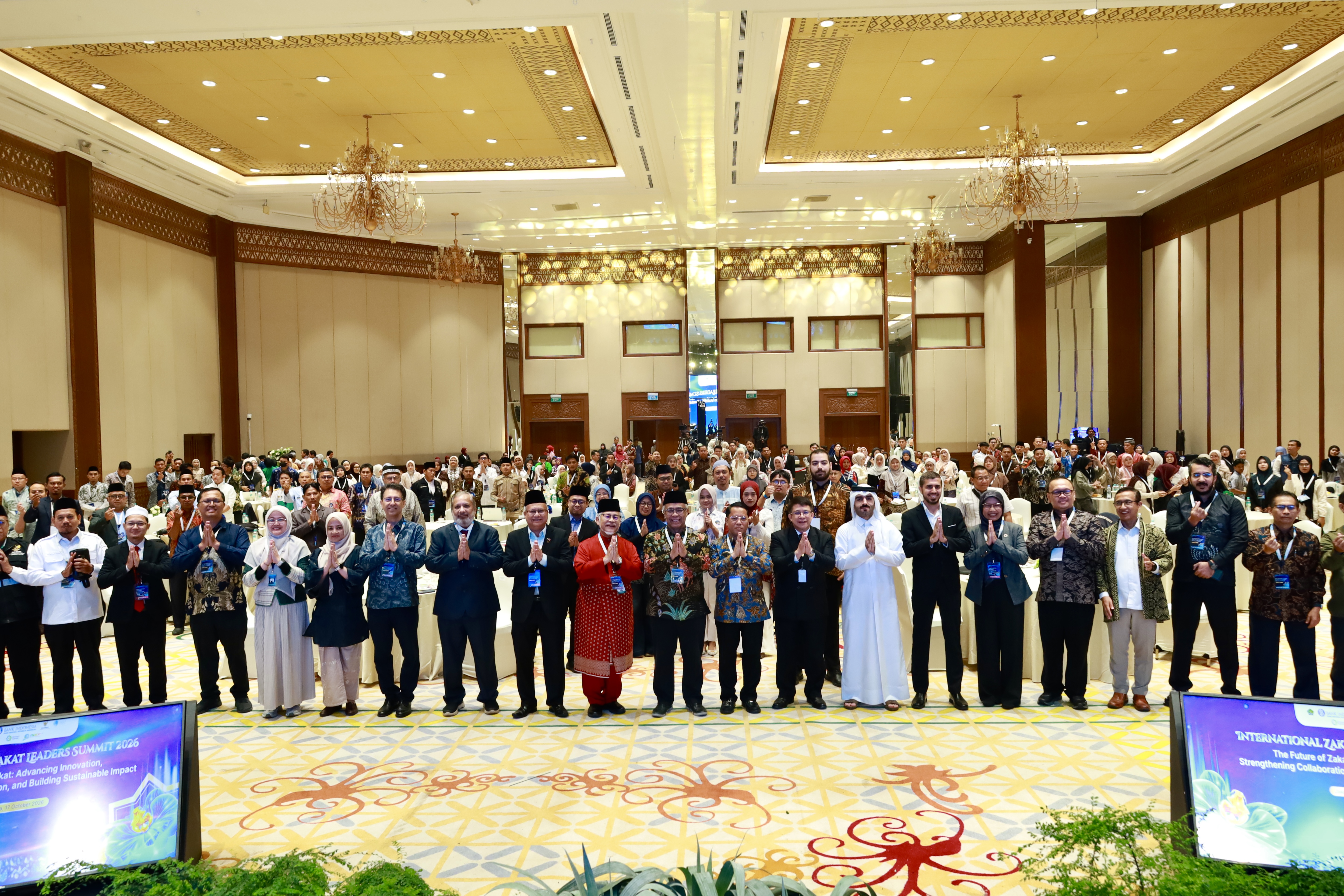
Other speakers and panelists included:
Saad M. El-Amadi, Chargé d'Affaires ad interim of the State of Qatar, Dr. H. Mokhamad Mahdum, BAZNAS Commissioner for Finance, Digitalization, and Operations, Hj. Neyla Saida Anwar, M.H., M.Hum., BAZNAS Commissioner for Control and Supervision, Haji Azrin Dato' Haji Abdul Manan, Deputy Chief Executive of the Zakat Collection Center, MAIWP, Abdulrahman Farwana, Representative of Ummet Vakfi, Prof. Dr. Irfan Syauqi Beik, Deputy Secretary of the WZWF, Dr. Mohammed Obaidullah, CEO of IBF Net Group, Dr. Ali Fallahi, Country Economist at the Islamic Development Bank, Nila Murti, Head of Financing for Development and Inclusive Growth at the United Nations Development Programme (UNDP)